
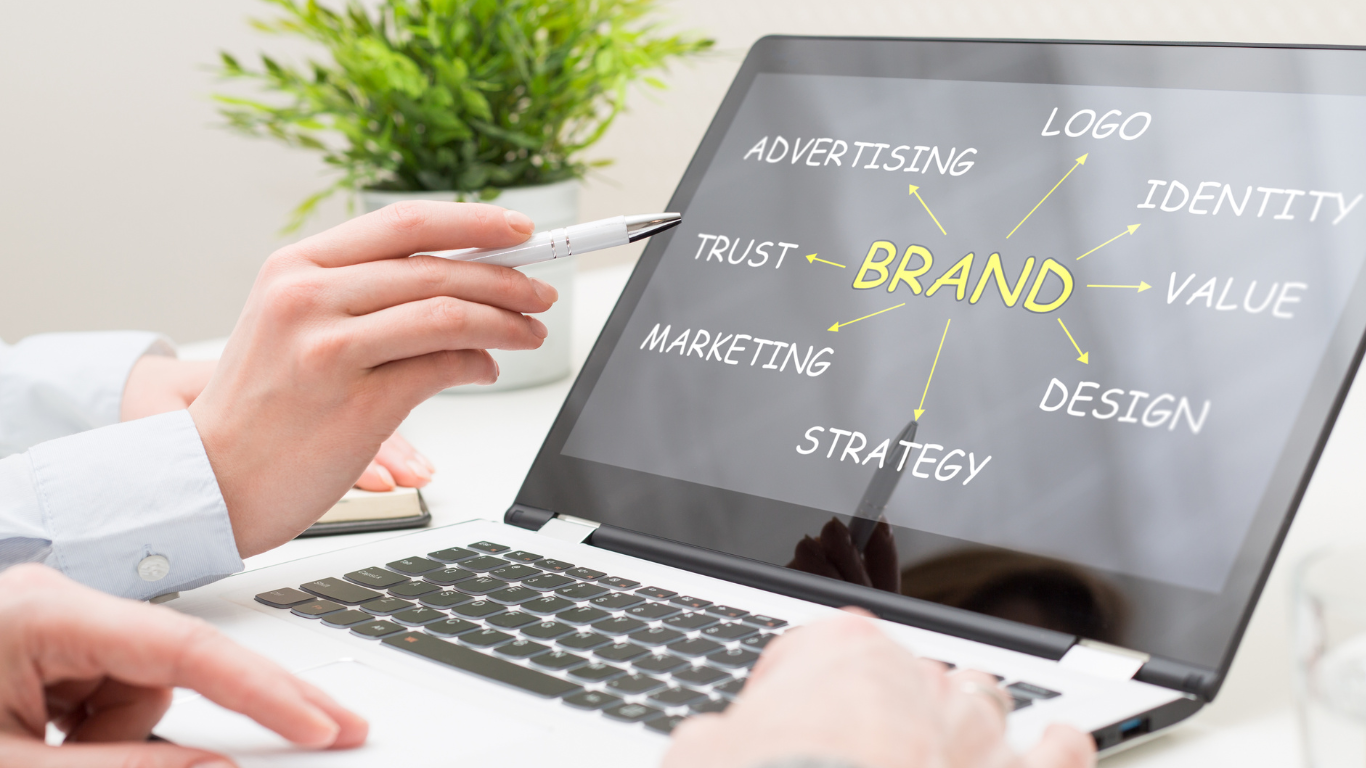
Build Your Brand Online with Digital Branding Tactics That Improve Conversions
Most businesses don't struggle because they lack a good product or service. They struggle because online, they look and sound like everyone else, which makes prospects hesitate. The fix isn't just "more ads" or "post more often." It's using digital branding tactics that make your business instantly clearer, more credible, and easier to choose.
When branding is done well, it doesn't just improve awareness; it also builds loyalty. It improves conversions, turning clicks into calls, form fills, appointments, and sales. Below is a problem-solution guide to the brand-building moves that typically have the fastest impact, especially when paired with smart Digital Marketing and a plan to Track Your Results.
Why "looking professional" still doesn't convert.
It can be great to have a beautiful logo and website, but they do not equate to an effective brand. This is because many brands spend a lot of time and money on branding but still end up with poor lead quality and high bounce rates because they fail to address prospects' questions quickly.
- Can you solve my problem?
- Can I trust you?
- Are you worth the price?
- What should I do next?
These issues matter for service companies. This includes Home Services Marketing. It also includes Healthcare Marketing. Lawyer Marketing and Multi-Location Franchise Marketing are in this group too. People may be rushed, stressed, or shopping around for the best deal. If your message does not speak clearly, they move on.
Product-based companies, like E-Commerce Marketing and Dealership & Manufacturing Marketing, share common challenges. These include shopping cart abandonment, low repeat business, and website visitors who don't convert into revenue.
Digital branding tactics that improve conversions (not just awareness)
Branding that converts is built from the outside in: start with what the customer needs to understand, then design and communicate around that. Here are the tactics that tend to move conversion rates without requiring a full rebrand.
1) Tighten your "one-sentence" value proposition
If your landing page visitor cannot explain in five seconds why your company is unique, then conversion rates will drop significantly. Your value proposition needs to be specific enough to attract the right customers and dissuade the wrong ones from making a purchase.
Conversion-focused fix: I help people develop the skills and tools to become independent thinkers who can contribute constructively to society. What makes my methodology different is that my students don't just learn about thinking; they learn how to think.
Sample Instructions: A service-based company should aim for efficiency and consistency; a health care provider should stress clarity and assurance; a legal firm should stress success and promptness; an electronics manufacturer should focus on quality and warranties
2) Align your brand voice across every touchpoint
Inconsistent tone is a hidden conversion killer. If your ads appear warm but your landing page is cold, if your social media content is informal but your emails are too formal, your audience will subconsciously lose faith in you.
Conversion-focused fix: Choose 3–5 voice traits (e.g., clear, calm, direct, supportive, expert) to use throughout your website headings, service pages, ad messages, email follow-up messages, and even reviews. In particular, it becomes crucial when dealing with Multi-Location & Franchise Marketing.
3) Build "proof" into the first scroll
The concept of trust is not one that we can take lightly when it comes to the Internet. We must earn it or pay the price of not having access.
Solution to the conversion problem: Introduce proof elements on the page fold or in the initial scroll, such as:
- Short, specific testimonials (results beat compliments)
- Review count and average rating
- Certifications, memberships, or compliance notes (especially helpful in Healthcare Marketing)
- Clear service area and response times (often critical in Home Services Marketing)
- Case-study style outcomes (valuable in Lawyer Marketing and manufacturing contexts)
This is part of "Build Your Brand" that translates into action, not just aesthetics.
4) Create landing pages that match intent
A common pain point in Digital Marketing is sending all traffic to one general page. If your ad promises a specific solution but the page is broad, conversions drop, because visitors have to do the work to connect the dots.
Conversion-focused fix: Create dedicated pages by audience and offer. For example:
- Separate pages for each service line (and each location if relevant)
- Dedicated pages for "Get More Customers" offers like consultations, quotes, or audits
- Product-category pages that clearly explain benefits, shipping/returns, and trust signals for E-Commerce Marketing
The goal is simple: the page should feel like the natural continuation of the ad, email, or search query that brought them there.
5) Reduce friction in your calls-to-action
This is the result of asking your customers to give too much information too early or at the wrong stage of the customer journey. You might have plenty of visitors on your site, but no leads. Or if you do have leads, they might disappear before closing the deal.
Conversion-focused fix: Offer a "ladder" of CTAs. Let people choose a lower-commitment step if they're not ready for the biggest one.
- High intent: "Book an appointment" / "Request a quote."
- Medium intent: "Get pricing" / "See availability."
- Low intent: "Download a checklist" / "Compare options."
The strategy not only helps e-commerce sell more products but also generates leads for service businesses without forcing everyone to follow a single strategy.
The biggest branding pain points (and what to do this week)
If your brand feels "fine" but results are inconsistent, you're not alone. Here are the most common issues that crop up across industries, along with quick, practical ways to start fixing them.
Pain point: You're attracting the wrong customers
This can occur because the message is too generic. The brand message tries to be all things to all people, and therefore, appeals to none.
Assignment for this week: Revise your three best headlines (home page, primary service page, and landing page) to reflect a single target demographic or use case. If you cater to several markets, such as healthcare, law firms, home services, dealerships, and manufacturing, each should receive its own customized message.
Pain point: People visit, but don't take the next step
It’s usually more of a clarity problem than a traffic problem. They have no idea what will happen once they click.
Do this week: Create a small “What to expect” section close to your CTA button. This will ease their fears and boost conversions (particularly in healthcare marketing and lawyer marketing).
Pain point: Your marketing feels busy but not effective
Updating the site, posting, and campaigning may be a constant treadmill. However, without proper metrics and tracking, the branding process is simply a matter of opinion.
- Homepage: Revise to highlight benefits for small business owners.
- Main Service Page: Tailor content to showcase solutions for tech startups.
- Primary Landing Page: Focus on features that appeal to busy parents.
Tailor your messaging for each area you serve, like healthcare, legal, home services, dealerships, and manufacturing. Don’t use a single, generic pitch.
How to connect branding to revenue with smarter measurement
Brand is often seen as being very abstract until you link it to the correct cues. This is because it's about tracking what your branding impacts - behaviors and trust.
As you Improve Your Efficiency, identify cues that help determine how far you've gone from "curious" to "committed," including:
- Conversion rate by landing page (which message is working?)
- Engagement on key pages (are people scrolling to proof and FAQs?)
- Return visitor rate (is your brand memorable?)
- Lead quality notes from your team (are inquiries more qualified?)
For multi-location brands, segment results by location to spot gaps in consistency. For e-commerce, watch how brand trust affects repeat purchase rate and email-driven revenue. For dealerships and manufacturing, pay attention to how well your content supports longer decision cycles.
Where to start if you want faster wins
If you want the quickest path to better conversions, start with the pieces that sit closest to the buying decision:
- Your homepage first-scroll message and proof
- Your top 1–2 service or category pages
- Your highest-traffic landing page from Digital Marketing campaigns
- Your primary CTA and follow-up flow
These updates support Get More Customers without needing a massive overhaul. Once those are set, add deeper brand assets. This includes content that tackles objections, comparison pages, and industry-specific messaging. Focus on Healthcare Marketing, Home Services Marketing, Lawyer Marketing, and others.
Ultimately, however, successful online brands go beyond merely being unique; they dispel doubt. By aligning their positioning, voice, credibility, and page intent, and tracking results, they build a brand that works for them. SuiteEdge helps you see your current position and plan for long-term growth, giving you the clarity to build a stronger brand over time. This brand helps them Build Their Brand.
Learn more about making your business famous and see what we’re doing for other companies just like yours on Facebook, Instagram, and Twitter!